
The Darkest Hour
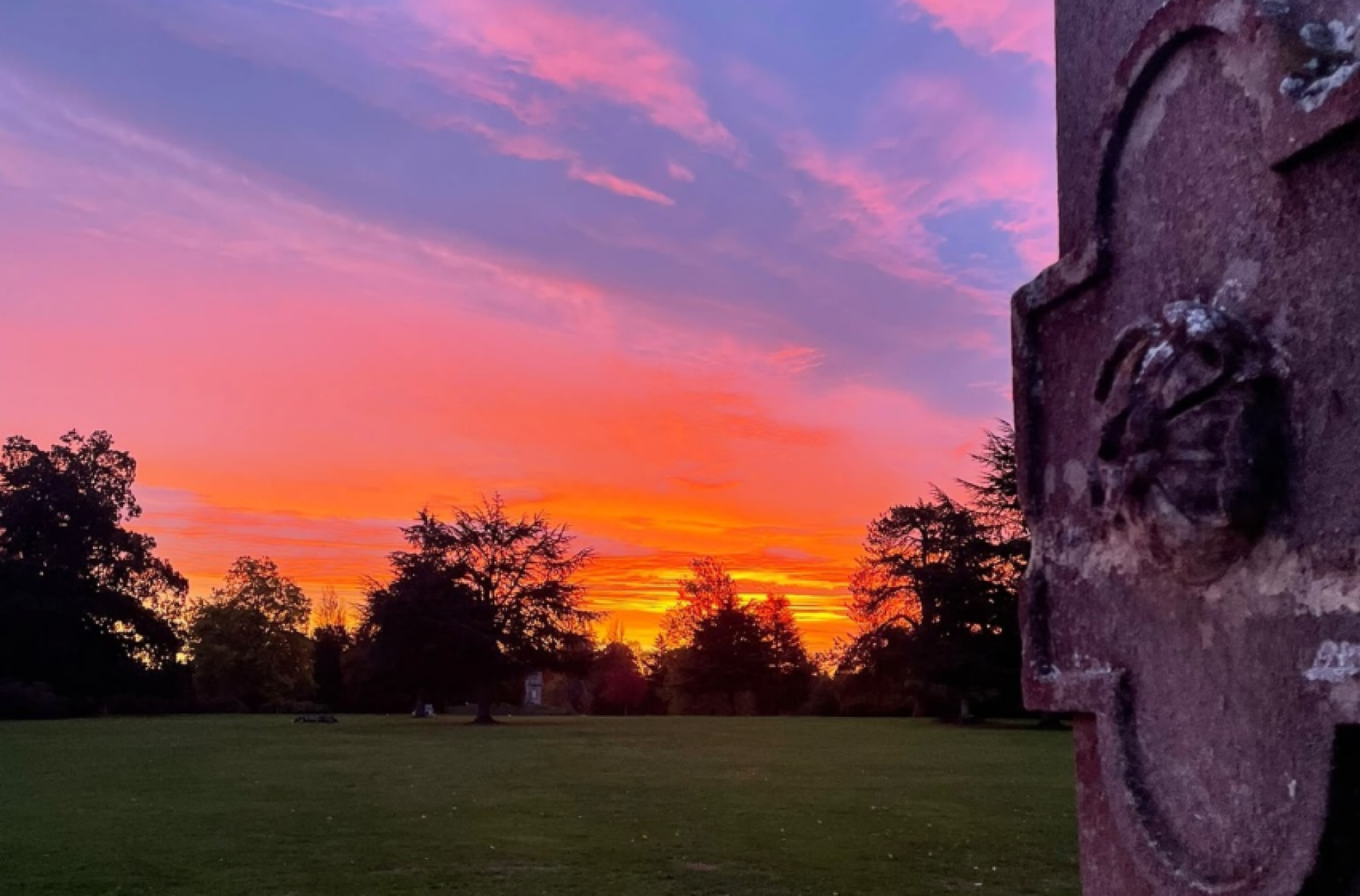
The Darkest Hour
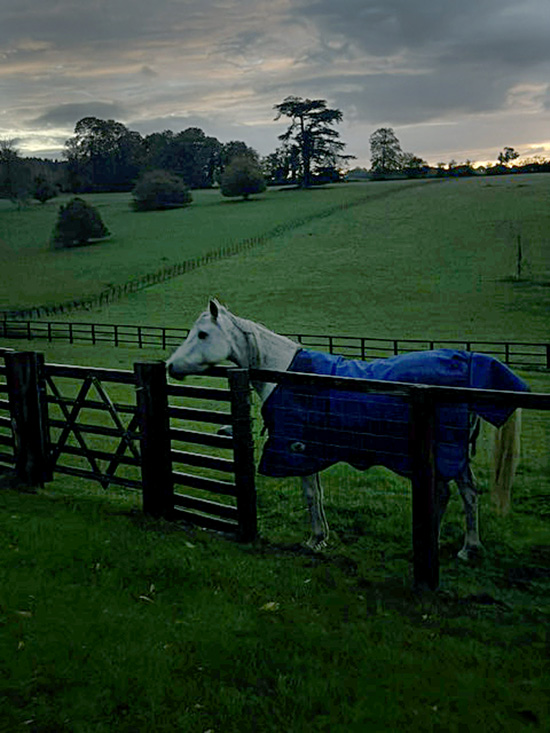
Inexorably, the sun is rising later and setting earlier. I keep forgetting it is far easier to do the late feed for Phoebe – my beloved arab mare - a little earlier. Thus I find myself treading rather gingerly in the half light down to her field. I can hear her whickering welcome before I fumble for the gate latch, hoping I can find her night rug on the fence. Pheobe’s main concern is that I lose no time at all before tipping her feed into a field bucket.
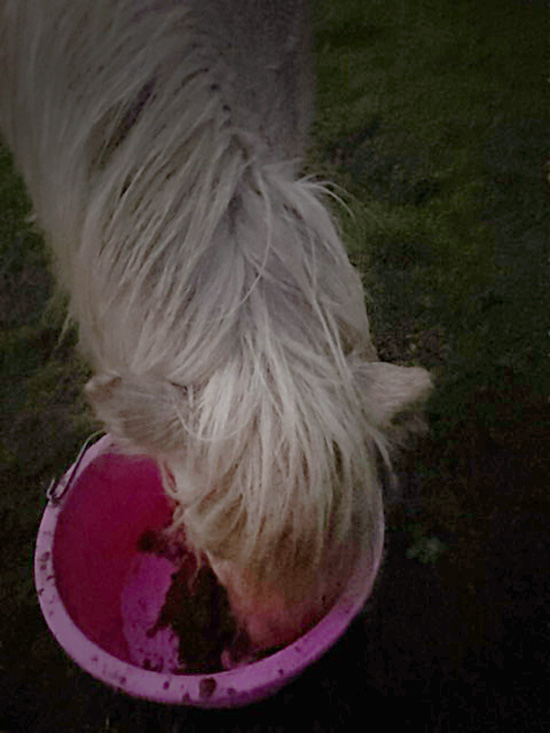
Phoebe starts slurping and eating with delight, lifting her pale head which now has a brown muzzle to rub happily on my jacket. My next port of call is the rug on the fence and too often I am wearing thin trousers and last minute gym shoes so as I tiptoe towards the rug I fail to avoid the nettles, meaning to make a note to strim them which I forget by the time it is morning.
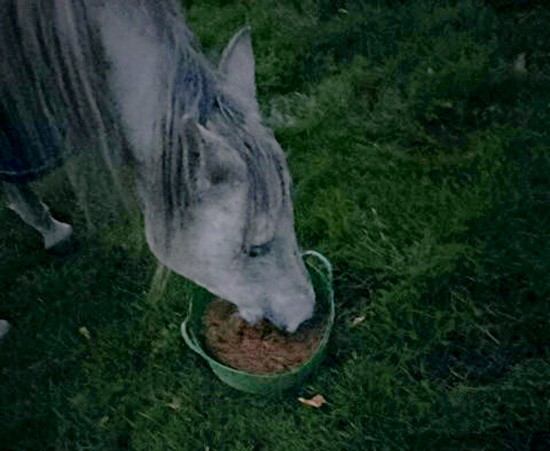
Returning in triumph to an unmoving Phoebe I fumble to feel which way round the rug goes. She has found the apple in her food so continues to munch in noisy delight. Happily I am winning with front buckles and am just bending underneath her for the tummy straps. After such success it is time to bury my face in her neck and breathe in the familiar smells. A slow stroke of her neck and neatly straightening her mane one way and I wish Phoebe goodnight and her huge dark eyes quietly checking around, focus on me before the bucket calls once more.
The equine eye is one of the largest of any land mammal. Horses have a range of vision of about 350°, and unlike people can look left and right at the same time but it is their their binocular vision helps a horses assess depth and is sharply accurate. Thus a horse will be looking straight at an object, raising its head when it looks to gauge a jump or at a distant predator. To use binocular vision on a closer object near the ground, such as a snake or threat to its feet, the horse drops its nose and looks downward with its neck somewhat arched.
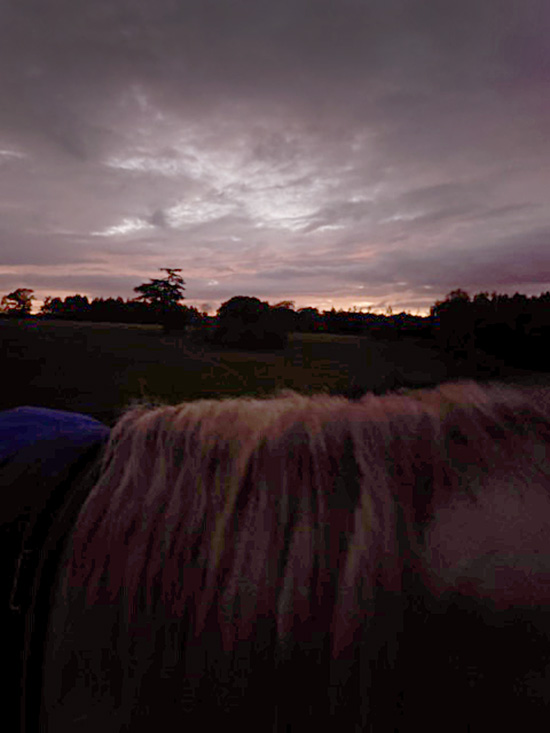
Their eyes are well adjusted for dim light but take some time to adjust from brightness to dark - in fact up to 45 minutes, which is far longer than a person (25 minutes). Therefore leading a horse from a sunny field to a dim stable means he or she cannot see to begin with.
They are sensitive to pattern , thus riding along an avenue here which suddenly has a car parked up or catching sight of an unexpected movement causes an instant reaction. Horses naturally see the blue and green colours of the spectrum and the variations based upon them, but apparently cannot distinguish red. Contrast however really matters and helps them find the jumps in a show ring. They have better vision on slightly cloudy days, relative to bright, sunny days as there is less flattening glare.
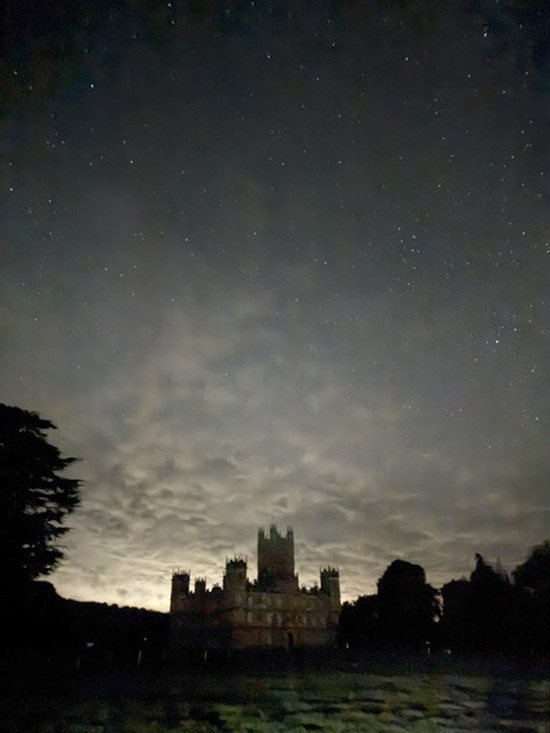
By the time I leave Phoebe my own eyes have adjusted better to the half dark. I still feel for the gate latch but find the dogs the other side waiting patiently watching. I turn to give a small handful of food to a slightly indignant Elsa (the Shetland pony) who does not actually need much at all, although not her view, but does not want to be left out and makes that very clear. She has seen and heard all my goings on.
It is a very settling part of the closure of each day with the sounds of the owls and rustling of other creatures ..a magical world.
0 Comments
- Christmas
- Community
- Conservation & Wildlife
- Dogs & Horses
- Egypt & Tutankhamun
- Entertaining
- Farm
- Filming
- Gardens
- History & Heritage
- Daily Life
- Royalty
- Cooking
- Interiors
- Heroes
- Stories and Books
- Architecture
- Cars
- Conservation
- Downton Abbey
- Events
- Gardens & Landscape
- Highclere Castle Gin
- History
- Planes
- Restoration
- Stories & Books
- Uncategorized
- Visitors
- Wildlife
Leave a Comment