
London Staple
London Staple
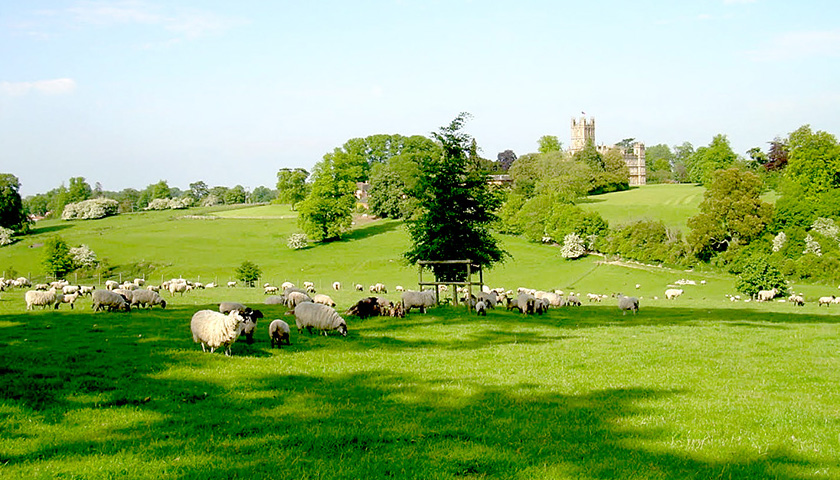
Leaving Highclere Park in the spring, cars and their occupants pause to take photos, for once not of the Castle but of the sheep and their lambs. The lambs offer endless entertainment: the ewes seem to run some sort of mutually agreed creche system so that the lambs can play together, chasing each other round or jumping on and off old tree stumps, little tails waggling and clearly pleased with their own prowess. They are and always have been an intrinsic part of this season at Highclere.
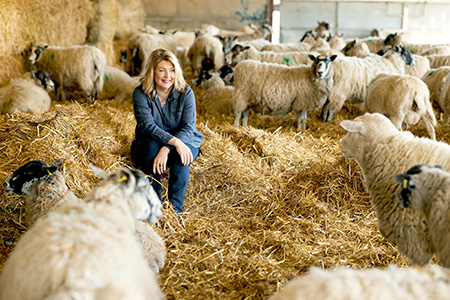
Today we have a flock of 1400 ewes: Romneys, Lleyns and Romney Lleyns crosses. The Romney breed evolved from medieval longwool types and records of sheep rearing on Roney Marsh in Kent can be traced back to the 13th century. Given its discrete landscape, the Romney breed has evolved over the centuries in comparative isolation and one of its advantages is its relative resistance to foot rot in comparison to many other breeds. A small group of Romneys were exported from England to New Zealand in 1853 for just this reason.
In 1823, William Cobbett, English journalist, politician and farmer, wrote of the sheep that “they take their name from the marsh. They are called Romney Marsh sheep. Very pretty and large. The wethers, when fat, weigh about twelve stone, or one hundred pounds. The faces of these sheep are white: and, indeed, the whole sheep is as white as a piece of writing paper. The wool does not look dirty and oily like that of other sheep”.
William Cobbett also rode through Lord Carnarvon’s park which he described as the prettiest he had ever seen so perhaps the combination of the sheep and the park would lead him into even further raptures today!
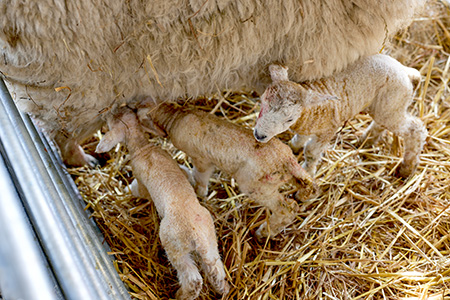
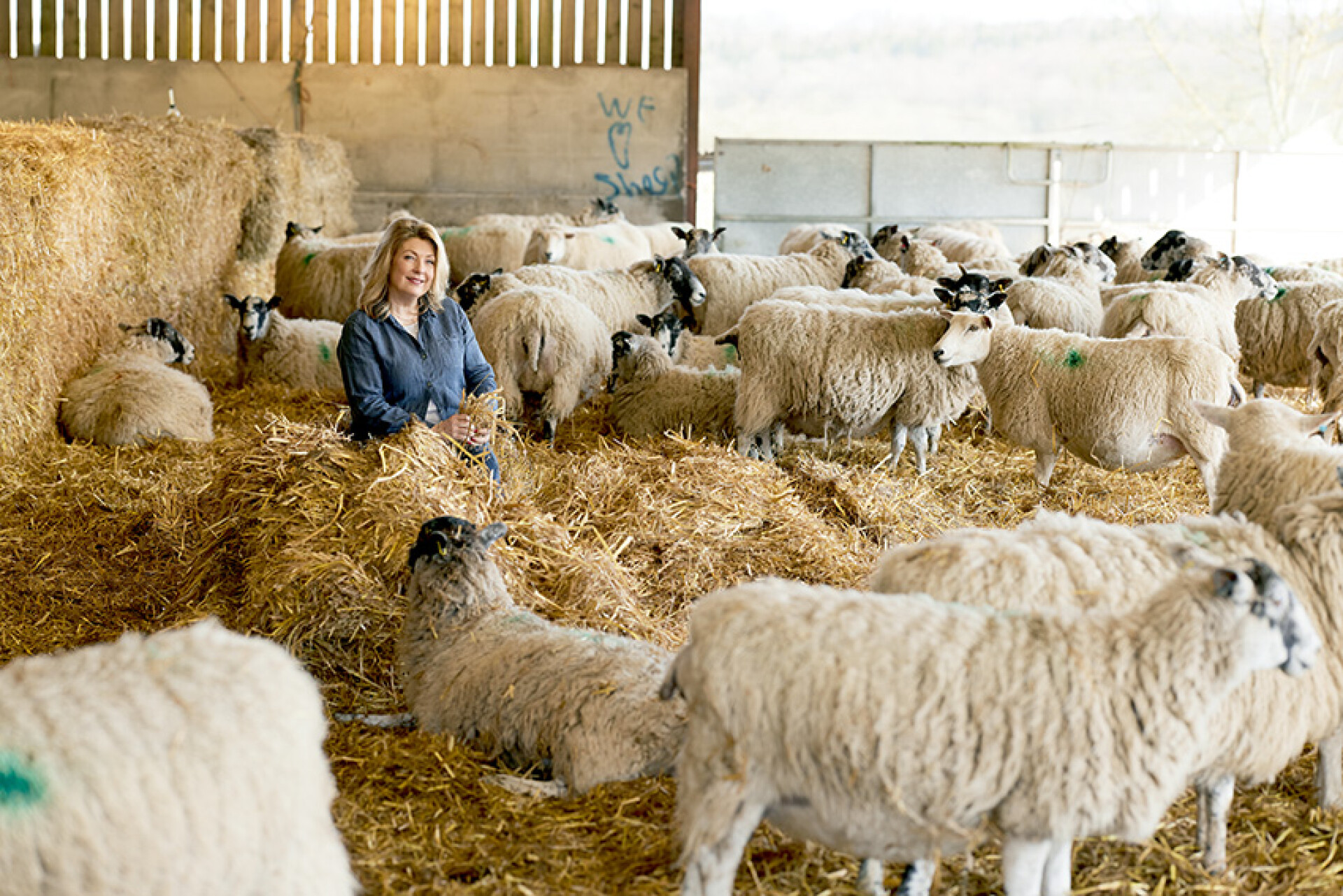
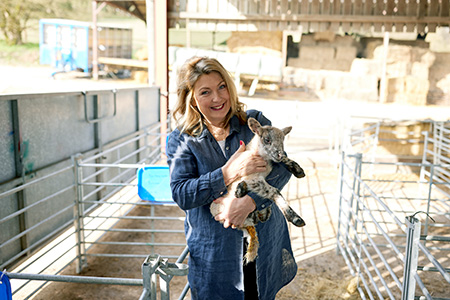
The gestation time for a ewe is five months and Simon the farm manager and Matt the shepherd aim for April lambing, when the weather has hopefully turned and all the single and twin ewes can lamb outside. Nevertheless, there is a continual patrol to ensure we are there to help those mothers who need it. This then leaves the ewes with triplets plus a matching number of singles to lamb in the barns under Beacon Hill.
Arriving at the barns, I first hear the ewes and lambs before, drawing closer, there is the familiar smell of haylage, straw and sheep – magic and the promise of tiny white bundles of legs and noisy angular heads.
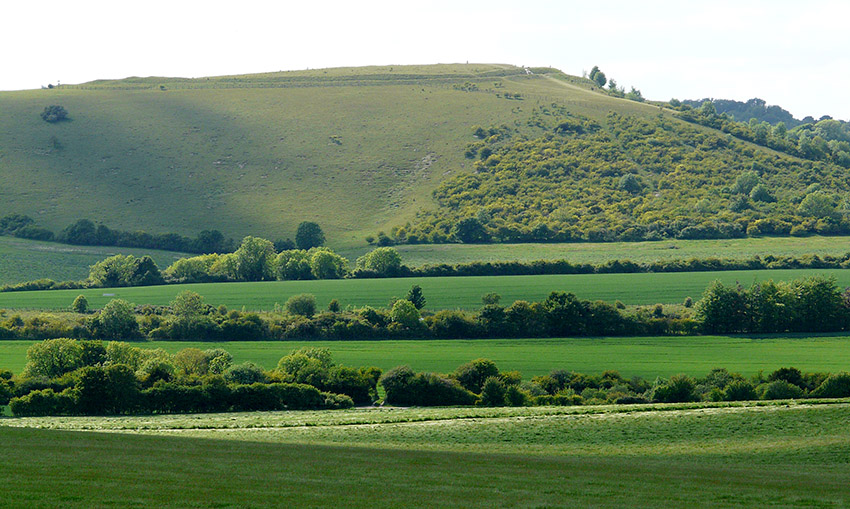
It is a time of year in which nothing has fundamentally changed. Sheep have been a valued part of the landscape here for well over a thousand years. Early 8th century charters for Highclere mention sheep “dells” – sheltered areas good for grazing and by medieval times sheep contributed a third of England’s export revenues.
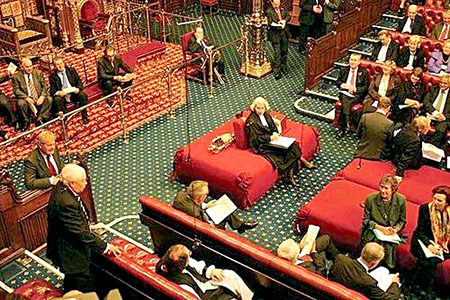
The 14th century in England in particular witnessed rapid changes in society, trade and climate, the later leading to what is often called a mini ice age. The Black Death fundamentally altered the terms of contract between landowner and worker, and agriculture developed from subsistence farming to one of cash generation. Living standards rose and those who survived the plague spent their money on better clothes and pleasure – each day was to be enjoyed as you never knew what might be around the corner. Wool was the critical cornerstone of the English economy to the point where a golden sheep adorned the London Staple, the forerunner of the Stock Exchange. Today, the Lord Chancellor still sits on the woolsack in Parliament.
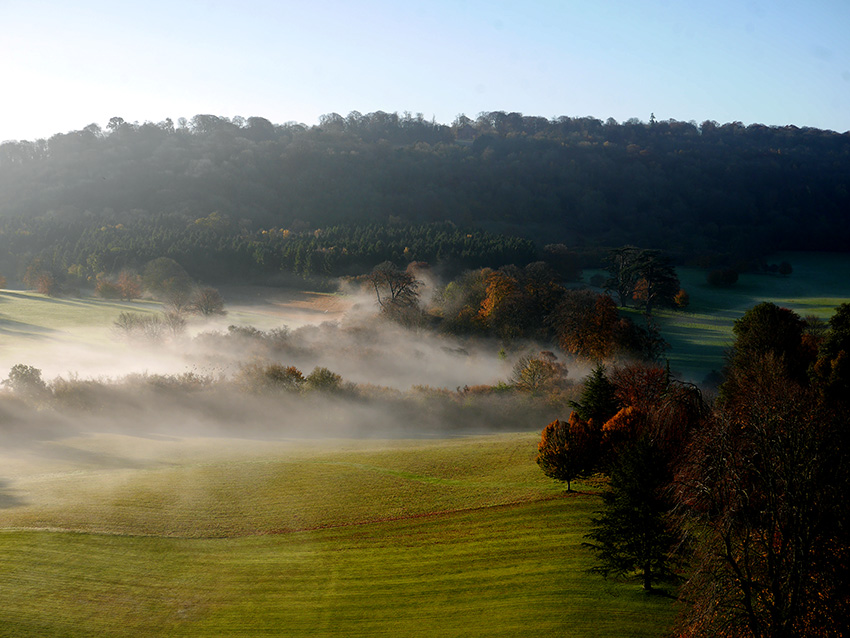
At Highclere today, sheep play a key role in our stewardship of the landscape of the chalk downlands. The nature of their grazing forms part of a complex relationship allowing grasses and other plants to thrive which in turn provide a home and food for birds, butterflies, moths and many other insects. The wool now goes into mattresses, and we have begun selling the meat directly to customers which is better value as well as unprocessed and therefore healthier food.
40 Comments
What a delightful view that first picture is!
It is magical
Lovely the pictures of the London staple did you and lord Carnarvon have a wonderful weekend and lam fan of Downton Abbey and highcelere castle
Thank you.
Thank you for a very interesting & lovely post today!
Lady Carnarvon,
This story causes me to ‘feel’ the softness of baby lamb wool! Seeing you sitting among the ewes and their babies is such a gentle picture. And your story of how sheep are the economic background of England shows the important link between the past and the present. Thank you for another reminder of Highclere’s gifts to so many others.
Martha
Thank you so much for your kind words, Martha.
Good afternoon. I'm curious, is the lamb meat sold to the USA? We seem to import a lot of New Zealand lamb but I never hear about lamb from other sources.
We have such a muddle with our export/trade treaties!
You are so blessed to be one of the people who looks after the environment of Highclere.
Thank you for all the wonderful work you do to keep Highclere thriving so people can enjoy it for years to come.
We are always grateful.
These beautiful images are a perfect way to start my day! It’s 10 am in New England, USA. I am having my tea and reminiscing about my trip to England last fall. Thank you for these wonderful pictures and the history lesson. Blessings from the USA!
All best wishes to you!
Thank you another most interesting read especially this time if year with all the baby lambs around
Thank you another most interesting read especially this time if year with all the baby lambs around
They are just so cute!
Last night I was thinking about sheep and the lambing process.
How old are the lambs and that percentage are harvested? How old are the ewes when they harvested? I’m sure this is all important to keep the flock healthy and manageable.
Thanks for sharing every week.
Good morning from Texas!
This is my first written communication with you. I have been enjoying your lovely stories and beautiful experiences for a couple of years now! I am fascinated by your article today regarding the lambing process. How do you know whether the births will be single, twins or triplets?
Thank you again for your blessed communications.
Blessings,
Linda Langley Price
We scan every ewe and mark them with different colours for 3,2 1!
Encore de magnifiques photos de vous et votre domaine, you Stiller have beautiful
picture of you and your estate, bonne journée
Merci!
Lady Carnarvon, I look forward each Monday in reading your blog. They are all so well written with marvelous topics. Thank you.
Mike Calogridis
Very kind - I so appreciate your comments
In my part of West Texas, people are surprised to learn that the 1st and original settlers in the 1870's were not cattle ranchers, but sheep herders. I have friends who can trace their heritage directly back to the British Isles.
How interesting - I did not know that!
Love these little wooly bears. I have Baby Dolls and adore them. Yours sheep are beautiful. They are the gentlest animals...
I so enjoy your site on Highclear. Brings back many wonderful memories of my visits there. You both have a fantastic bovation there. Keep up the goor work.
Living I n Australia it is extremely interesting to read about a different breed of sheep and the hertige.Thank you so much for your extreemly interesting blog.r
Oh the beauty of lambing season, my grandparents farm in country Victoria, Australia stocked Merino sheep. If the Ewe died I was allowed to bottle feed the lamb and hand raise it. Wonderful memories of the 1960's.
Spring sure is a magical time. Romney sheep are still the most popular breed here in New Zealand.
I think there are some notes somewhere about working to ship sheep out to Australia
What a wonderful start to Spring! Since I am a lover of good woolen garments I'm so glad that Highclere and the Carnarvon's are taking such good care of all our woolly friends! Thanyou for a great article!
What a stunning pic with the sheep! Australia was built on the sheep’s back
and raising sheep is still integral to our landscape and economy with our farmers leading the world in Merino
breeding and production. Nice to know we have farming roots in common. Very interesting article - thank you.
I hope we have a lot in common
I visited Highclere 2 weeks ago and was quite pleased with how the tour of the house has changed since last visit 3 years ago.
It also seems to be wonderfully successful.
Thank you so much for your Blog and the pictures. I look forward to them every week and to reading about Lady Almina when I get home.
I have always been a fan of Downton and
am now a regular reader of your blog and
I truly look forward to it.
I write a food column for a small local
newspaper here in central Florida. I would
love to do a very short written interview
with you about the kitchens, the food and
dining and entertaining at the castle.
Please let me know if you are interested and
available. If you would like I can send you a
copy of some of my work as well as a copy
of the publication. It's called The Chronicle.
Thank you so much for sharing your world!
It reminds me of what I do to help my friend Judy who keeps 50 ewes in our fields, we have nearly finished lambing for this year. At 85 years old and resantley lost My wife it gives me something to get up for on a morning
Dear Lady Carnarvon:
Thank you for this Monday's blog and the very nice picture of you with the sheep.
Perpetua Crawford
Leave a Comment
- Christmas
- Community
- Conservation & Wildlife
- Dogs & Horses
- Egypt & Tutankhamun
- Entertaining
- Farm
- Filming
- Gardens
- History & Heritage
- Daily Life
- Royalty
- Cooking
- Interiors
- Heroes
- Stories and Books
- Architecture
- Cars
- Conservation
- Downton Abbey
- Events
- Gardens & Landscape
- Highclere Castle Gin
- History
- Planes
- Restoration
- Stories & Books
- Uncategorized
- Visitors
- Wildlife
Highclere is an outstanding example of stewardship of the land and environment.
you are kind