
Spanning Time
Spanning Time
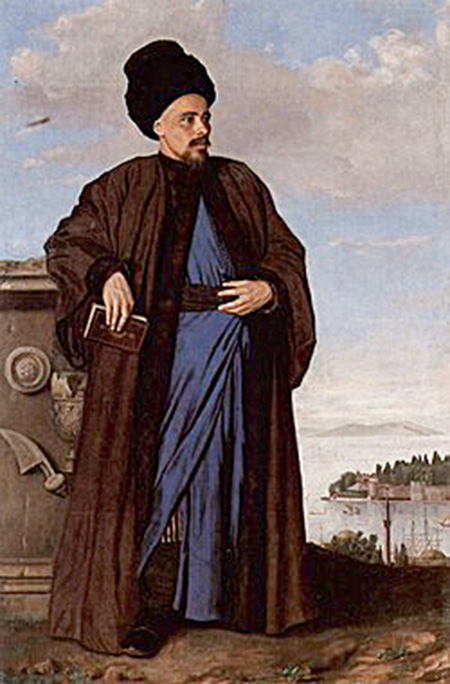
The clergyman Richard Pococke was an inveterate traveller. Between 1737 and 1741, he visited Egypt, Palestine, Lebanon & Syria, Asia Minor and Greece. These travels were later published in his “Description of the East “of 1743 and 1745 and he became something of celebrity as he told stories of what he had seem.
His mother was Elizabeth Milles born here at Highclere. Meanwhile his grandfather Isaac Milles was a much-admired theologian and English cleric, often described as the model parish priest of that day. The parish register of Highclere describes him as being here ‘for 39 years 2 months and 7 days ..the constant resident rector and pastor of this parish,’ and records his ‘integrity and piety’ and his charity to the poor.
His grandson Richard Pococke also had the reputation for being conscientious despite the time he spent travelling!
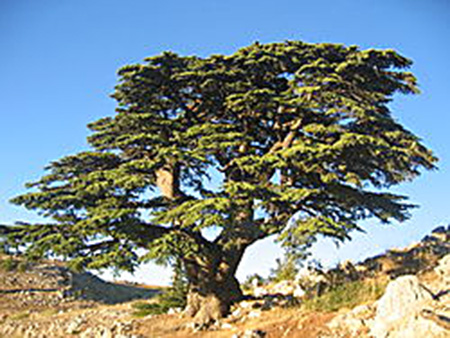
Richard Pococke returned to England (and Highclere) not just with extensive journals but also with cones he had carefully collected from the extraordinary trees he had seen – the cedars of Lebanon. The trees he described were broad of girth and grand in presence, some of which were estimated to be 1,000 or even 3,000 years old meaning that the cones he collected had links back to the time of Christ or even Tutankhamun.
He described the trees from a distance that looked "like very large spreading oaks." but on closer inspections the trunks of the trees were short, splitting near the bottom into three or four massive limbs which "appear something like Gothic column yet composed of several pillars,"
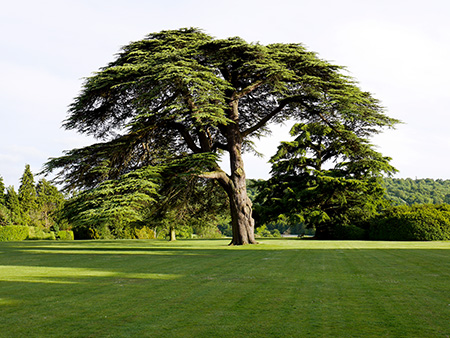
Some of these cones were planted here at Highclere, carefully grown to sapling height in a protected environment by the gardeners before being planted out in the park.
My youngest sister Georgie and her husband, who is from Lebanon, gave me one of my favourite books which is about cedars of Lebanon, with the subtitle “Pledge of Eternity”. They are truly exceptional trees, majestic and enduring, mentioned many times in the Bible, coveted by Alexander the Great, Antigonus, the Romans, and the Arabs to build fleets of ships, and before that an important symbol for the Egyptian Pharaohs who valued the wood which was deemed incorruptible.
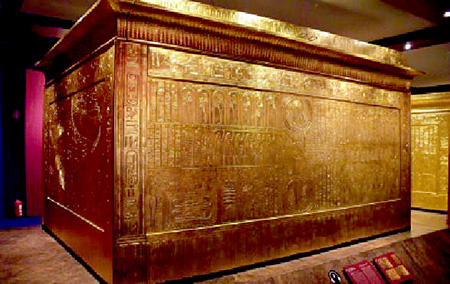
Cedar wood had to be imported into Egypt, and was much prized for its distinct aroma, beauty, and workability. For example, it was used in many of the valuable artifacts found in Tutankhamun's tomb including the huge golden shrines in the Sarcophagus Chamber and various chairs and boxes. Cedar of Lebanon was also essential for producing the long, sturdy planks needed for large ships and royal funeral barques, for example the reassembled 43metre long solar boat of Pharaoh Khufu, now moved to the new Grand Egyptian Museum.
It was, and still is, used for panelling and musical instruments and the robing room at Highclere is lined in linenfold cedar wood to help preserve the fabrics from moths and other bugs.
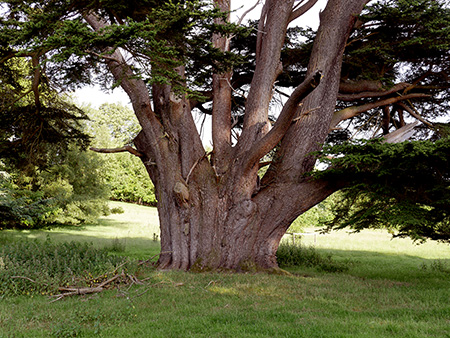
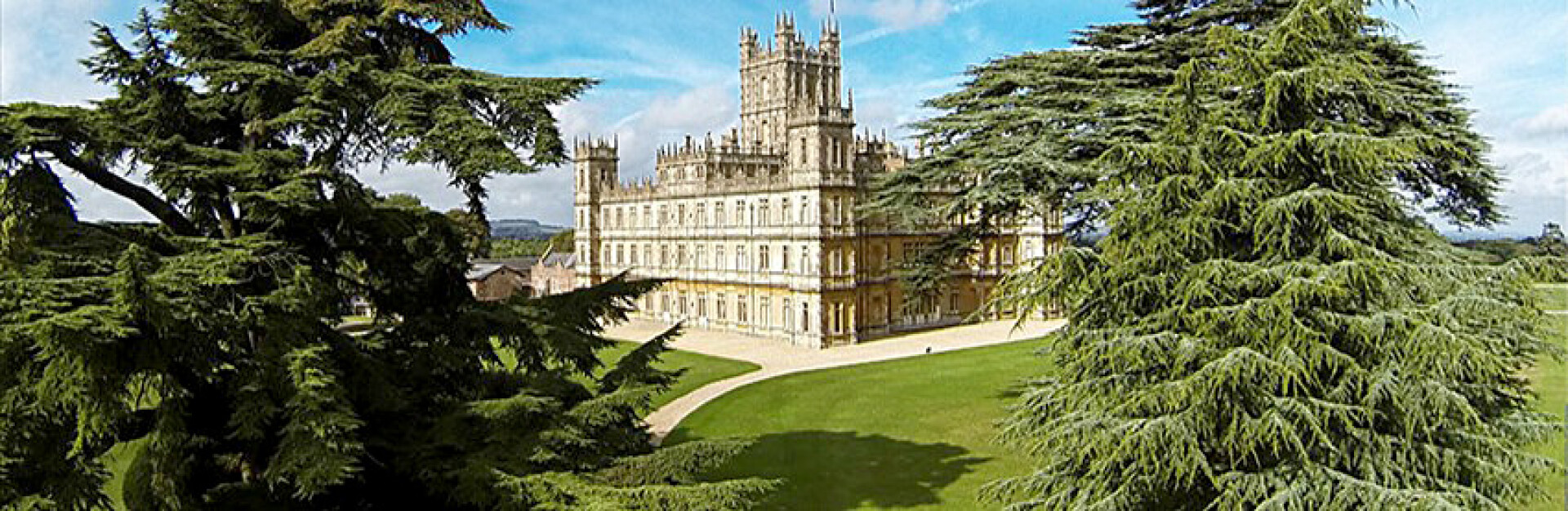
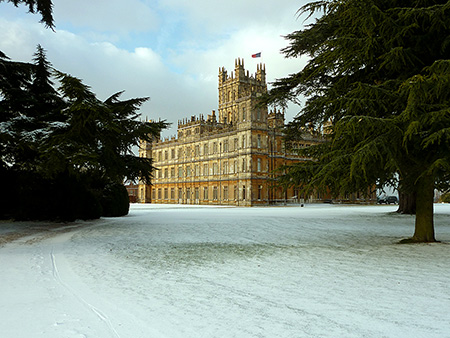
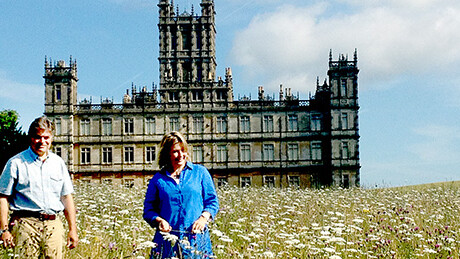
These days, most of the audience of Downton abbey would recognise the outline of these trees within a heartbeat. Thanks to the TV series and the films, their unique silhouette has become almost iconic along with the elegant carved stone turrets and central tower of the Castle as it rises up and out of the landscape. The trees flank the Castle. and provide structure and beauty throughout the year in the park.
The cedars at Highclere have only witnessed some 250 years of history, not very long compared to some of their counterparts in Lebanon. However, every year we plant some more, as old friends are brought down in gusting gales, or branches overloaded with snow crack and break. We replant today to give pleasure to those who succeed us 150 years hence and are so grateful for the vision of those who planted them in previous centuries.
Sadly, the fate of the forests of Cedars in Lebanon is now under threat. Some of the trees there have now been renamed ‘the survivors’ as thousands of them have been felled, reducing them to groups of a few hundred. Whilst we are able simply to admire them at Highclere, they are needed for shelter and firewood in the war-torn hills around Syria and Lebanon.
The trees are just another link to these countries in this extraordinarily fragile yet interconnected world.
23 Comments
Thank you for this brilliant essay. I've always wondered about the cedar trees at Highclere, I knew there was a story.
As we know, stories from Highclere are always big picture stories drawing from the world to the world.
We may need a television program about the cedars, as there was nothing in the Downtown canon about them.
They are so special
The TREES of Highclere/Downton! They’re magnificent and gobsmacking and a favorite feature of the show! So glad to learn more about the cedars—coincidentally just after we sawed off a tiny graying one thought to be dead in our garden, not recognizing it as cedar until we saw the red beneath the twisted stalk’s bark.
Lovely the pictures of a spanning time and did you and lord Carnarvon have a wonderful weekend and lam fan of Downton abbey and higcelere castle
Lovely the pictures of a spanning time and did you and lord Carnarvon have a wonderful weekend and lam fan of Downton abbey and higcelere castle
Lady Carnarvon, I imagined a tiny scent of childhood cedar Christmas trees. Do I remember seeing those huge trees in scenes of picnics and children playing on the grounds in Downton Abbey? Thank you for another story of Highclere’s interesting history.
Martha G
What a very interesting blog so very interesting thank you ,
Thank you!
Thank you fo another most interesting read this morning. The majestic cedars at Highclere are stunning but I hadn't caught up with their history before. We owe a great deal to the intrepid travellers of years gone by, like Richard Pococke, who collected saplings and seeds that are the backbone of our gardens and landscapes today.
Fascinating article.
Thank you!
Now you have me reading about
the solar ships of Pharaoh Khufu!
It is amazing!
Thanks for such an interesting article on these magnificent trees. Love all of your info you share with us. I love to travel to England ..just haven't made it to Highclere yet. Regards. Sherrill Kearney
I love reading about your cedar trees at Highclere
Castle. Here in W. Texas we have the dewberry
Juniper, mountain ash cedar and salt cedar. I have
only this to say about them" If one isn't allergic to trees
arriving in San Angelo, you will be by the time you leave
Have a lovely week Lady Carnarvon.
Oh, the fragrance of my grandmother’s cedar chest, which I loved to breathe in when I was a child . Cedars are special on a large scale and on a small scale as well — delighting a little girl, and bringing back happy memories to the grownup me. Thank you for this informative post!
As ever trees offer us so much ..
Thank you for this wonderful history on the cedars. They were one of my favorite things that I was able to see touch and take pictures of while I visited. Highclere in 2024 .
I have made these photos into canvas photos, screensavers, cell phone covers and iPad covers all depicting these beautiful trees,
especially Mary’s tree from Downton Abbey. I loved seeing this and I appreciate you sharing this information.
Warm regards,
Susie
Such an interesting article on the cedars of Lebanon. In describing the building of Solomon's Temple
the wood came from these cedars of Lebanon.
Thank you for looking ahead and replanting fallen ones.
Thank you for a beautiful, compassionate observation.
Thank you for this very fascinating and informative article on the cedars of Lebanon.
All trees are precious and we were so honoured to be the custodians of a few ancient oak trees and woodland in our former home.
These beautiful cedars add shape and variety to your stunning park at Highclere Castle. Long may they stand proud.
Fascinating post. Very much enjoyed.
Thank you
Lady Carnarvon,
Like all historical trees, Cedars of Lebanon
should be preserved. These lovely trees can
do so much. The wood smells amazing.
They look so beautiful next to Highclere.
Leave a Comment
- Christmas
- Community
- Conservation & Wildlife
- Dogs & Horses
- Egypt & Tutankhamun
- Entertaining
- Farm
- Filming
- Gardens
- History & Heritage
- Daily Life
- Royalty
- Cooking
- Interiors
- Heroes
- Stories and Books
- Architecture
- Cars
- Conservation
- Downton Abbey
- Events
- Gardens & Landscape
- Highclere Castle Gin
- History
- Planes
- Restoration
- Stories & Books
- Uncategorized
- Visitors
- Wildlife
Hello, thank you for this fascinating post. May I ask, what is the title of the book you mentioned? I’d be very interested. We have several cedrus deodarus, and are learning about various cedar varieties and origins! Thank you, -E
Printed in both English and French, measuring 33 x 25 cm, and weighing about 1.6 kg. It is available through
specialty distributors like LebanonPostcard.com for around $99.50 CAD.