
Flint
Flint
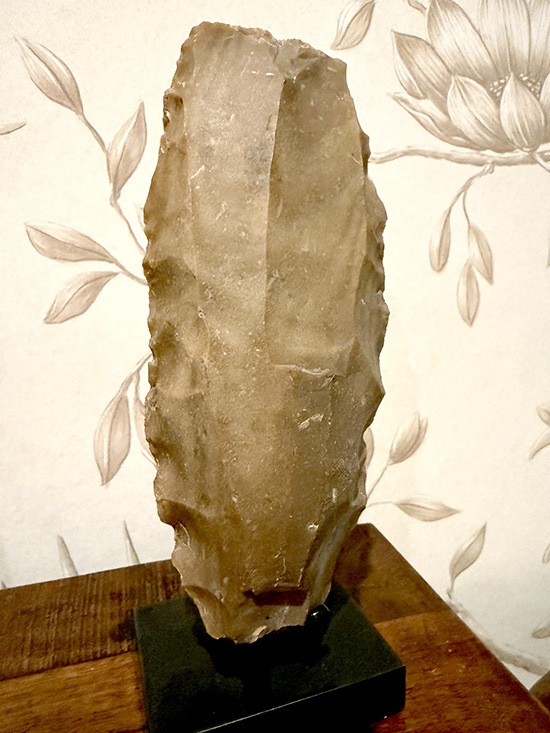
In my hand is a cool, smooth and densely satisfying to hold oblong ‘core.’ The surface shows the concave scoops left behind when a usable blade or flake was struck away. It has a a rich toffee-butter colour which gives these flints their nomenclature of ‘livre de beurre’ or pound of butter, although in this case the core is massive and certainly more than a pound.
This buttery colour is characteristic of flints from Le Grand Pressigny, a region in France, and a famous prehistoric centre for flint production some 5000 years ago. For me, the core is defined by its negative space, a testament to the ancient intent of the knapper. Once a raw, smooth nodule of high-quality nodular flint, it has been systematically reduced into a multi-faceted core. The surface tells the story of an expert knapper rhythmically working the stone to produce what to my eye today takes on an abstract, almost sculptural quality.
Broadly dated to the Neolithic period (c. 4000–2500 BCE), cores originate from one of the most transformative eras in human history. The Neolithic era saw the dawn of agriculture, animal domestication, and permanent settlement as people shifted from being nomadic hunter-gatherers into organised farming communities, developing advanced techniques in toolmaking and resource management
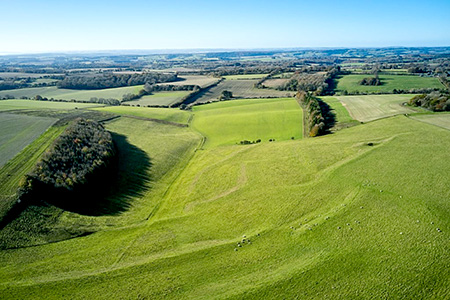
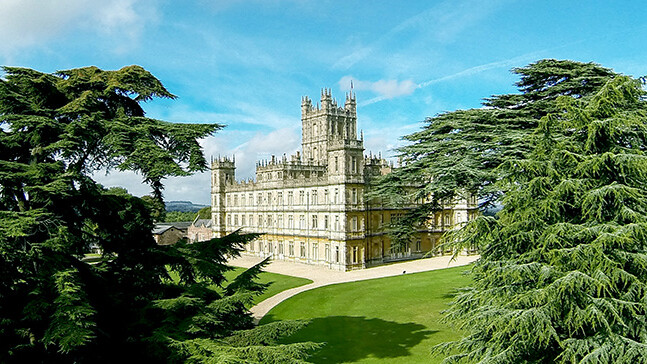
Remains of ancient settlements can be found in many areas around Highclere as this is a chalk-rich terrain with abundant flint deposits and thus was likely to have been a key region for prehistoric tool production. There is evidence of flint-working sites and habitation areas throughout Britain, showing how Neolithic craftspeople skilfully exploited the natural resources of the landscape. Scrapers like this would have been a vital tool for daily life, used to prepare hides, shape wood, and process animal remains for clothing, tools, and sustenance.
Our ancestors chose to live where their needs fitted with what the land around them could provide. Their survival depended on a close relationship with nature, with the rhythms of the year and presumably their inherited community knowledge. The stone I am holding is clearly an individual polissoir but larger stones could be used by several people working together.
As flints were used as a major building material in prehistoric times, it is likely that they probably formed the barrows -the bronze age tumuli - at the foot of Beacon Hill in the centre of the Highclere estate. Later on, the Romans tended to combine flint with brick and stone both for greater strength and for the fact that they are of course cheap and freely available.
Between the 11th and 15th centuries, flint was widely used in medieval churches and buildings in southern England, and knapped (squared) flint was often combined with limestone or sandstone for decorative effects. The early Anglo-Saxon church here at Highclere would have been a flint and stone construction, perhaps inspiring the 4th Earl of Carnarvon to use flints when he built Highclere Church in 1875 near the village of Highclere.
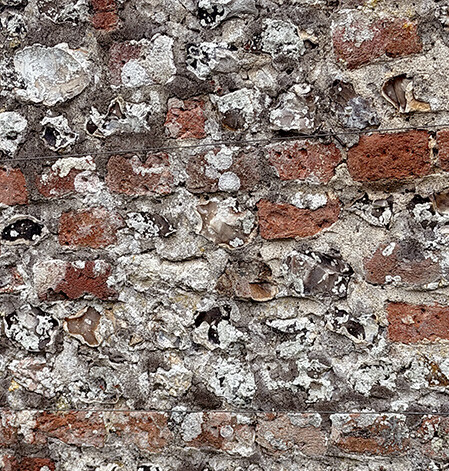
Flint is everywhere you look at Highclere. When freshly extracted from chalk, flints are black with a white crust, but weathered flints – from fields, riverbeds, beaches or gravel pits – can vary in colour from blue and grey to yellow, brown and even orange.
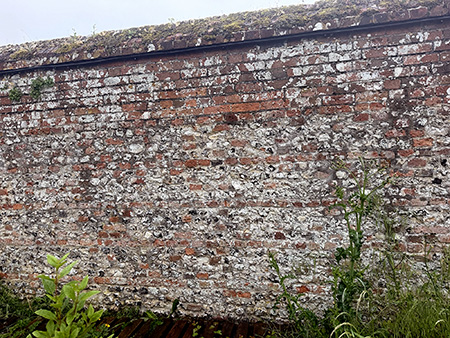
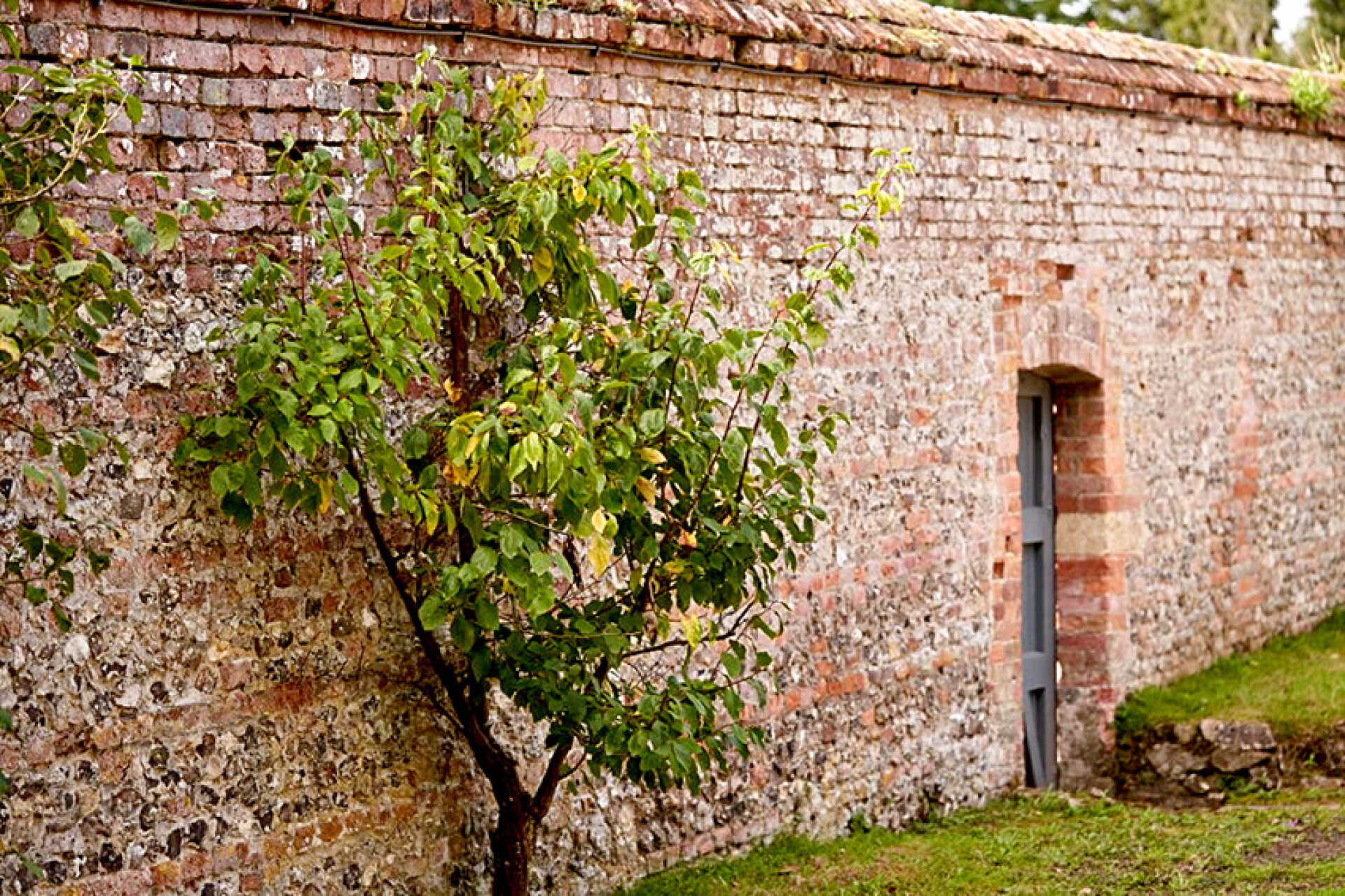
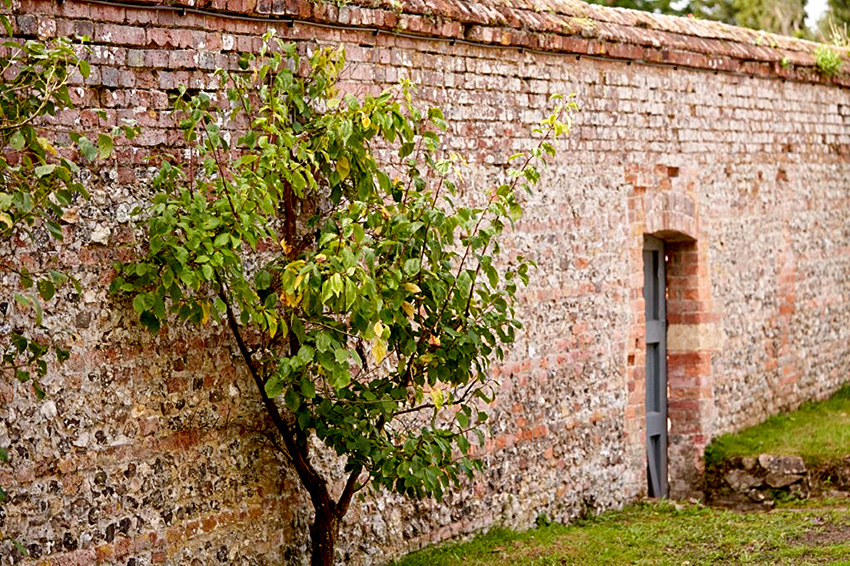
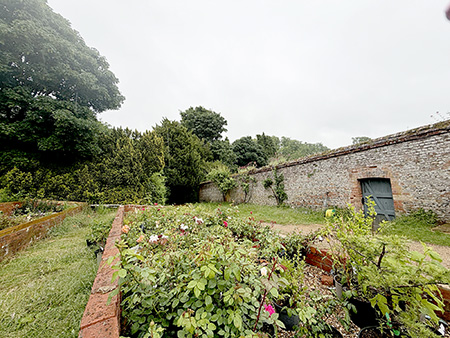
The lower part of the Monks Garden wall is predominantly flint and stone and has survived later centuries adding in courses of brick on top of it – it is extraordinary how durable it is. The original wall was probably only about 5ft high, surrounding a south sloping aspect with a frost gate in the lowest side. The brick was added in the 18th century, along with coping stones, by the 2nd Earl of Carnarvon to add height, every brick being much more expensive than the flint and limestone original. We have taken the flints blue grey colour as an inspiration for the ‘house’ paint colour on doors and soffits.
There is something entirely magical about walled gardens. Both havens and secret places in which to meander and find sanctuary, they also offer protection for vulnerable trees, herbs and vegetable and are both practical and imaginative.
To make a wall you need a reason for it and a place to build it, the necessary materials and, above all, foundations. You build it one brick at a time which is a positive metaphor for the journey of life for most of us. The word “brick” is often used to suggest character traits of reliability and stalwartness and compliments such as “being a brick” were once common parlance.
These are certainly qualities you would hope for in a wall and there never seems to be a day when we are not trying to put another brick in the wall or to make something more robust and better able to weather the storms, whether metaphorically or in reality.

18 Comments
Another most fascinating read this morning. How lucky we are that so much detail has been documented over the years. So fascinating. I haven't seen a great many flint buildings but those I have seen are beautiful. Your Monks Garden is a lovely place and the one arched wall so pretty with the lavender and rose border and the other with various vibrant penstemons and dwarf agapanthus and tall cream sculptural pots dotted among them. Thank you for giving the history of the additional brick courses. So interesting . .
Thank you for your kind words, you are most welcome.
Merci Lady Carnavon pour ces précieuses explications ! Grâce à vous je peux enfin traduire correctement le mot silex quand je tente d'expliquer la construction de notre presbytère du 18ème siècle en Normandie !
I have visited Highclere twice and always enjoyed seeing your estate. History is my first
Love and your home is such a wonderful example of that.
Very interesting. You've provided a marvelous story of flint, many details I knew nothing about. Many thanks.
I'm delighted my post helped you learn new details about flint.
Althea,
I couldn’t have said it better. Lady Carnaarvon’s stories of the flint’s uses at Highclere and the culture from which it comes provides another history lesson about Highclere on a lovely Monday morning.
Thanks to you both! I remember how interesting the wall is when we toured Highclere in 2013.
Martha Glass
Althea,
I couldn’t have said it better. Lady Carnaarvon’s stories of the flint’s uses at Highclere and the culture from which it comes provides another history lesson about Highclere on a lovely Monday morning.
Thanks to you both! I remember how interesting the wall is when we toured Highclere in 2013.
Martha Glass
Lady Fiona,
I'm delight for your post,thank
you for your words.
Lovely week...
Lady Fiona,
I'm delight for your post,thank
you for your words.
Lovely week...
You inspired me, Lady Carnarvon, to learn even a bit more about flint, in addition to the wonderful lesson you presented us with. Here are some interesting facts that I learned: On the international hardness scale, flint ranks 7 out of 10, where diamond is 10, so it is harder than most materials commonly encountered in the natural environment. It also has the property of taking an edge thinner than a steel blade (only a few molecules thick) so it is literally sharper than a razor. Flint is still in use today as surgical tool because incisions made with a flint blade heal more quickly and are more sterile.
That is really interesting Laura, thank you for sharing.
Flint is so useful as your information gave
today.
But, flint gets everywhere and farmland
can suffer when machinery causes a spark
and fires start. In this dry year it’s very
worrying.
Dear Lady Carnarvon,
I was at Highclere today and wandered round the Monks Garden …. I just wish I’d had the sense to read your blog for today before I went there so I could have had a better look at the wall!
Thank you for your fascinating blogs. I look forward to reading them every week.
Such an interesting article. One day I will visit and see all the wonderful things you talk about. Love your articles.!
Thank you for this very informative piece on flint! I referred to someone retiring yesterday as “losing a brick” to our hospital’s foundation so your article seems timely! Your piece is beautifully written! I want to return to England to see the church, the Monks Garden wall, and appreciate the livre de beurre!
A picture of blue flint would be a nice addition to your next blog :).
So very interesting to read we saw a lot of the flint walls when visiting a few years ago and today a good friend and her husband are visiting with the local coach company she has already sent some nice pictures feeling very envious thank you fir all your interesting blogs
Leave a Comment

- Christmas
- Community
- Conservation & Wildlife
- Dogs & Horses
- Egypt & Tutankhamun
- Entertaining
- Farm
- Filming
- Gardens
- History & Heritage
- Daily Life
- Royalty
- Cooking
- Interiors
- Heroes
- Stories and Books
- Architecture
- Cars
- Conservation
- Downton Abbey
- Events
- Gardens & Landscape
- Highclere Castle Gin
- History
- Planes
- Restoration
- Stories & Books
- Uncategorized
- Visitors
- Wildlife
Lovey picture of flint and did you and lord Carnarvon have a nice weekend lam a fan Downton abbey and highcelere castle