
Mrs Tiggywinkle
Mrs Tiggywinkle
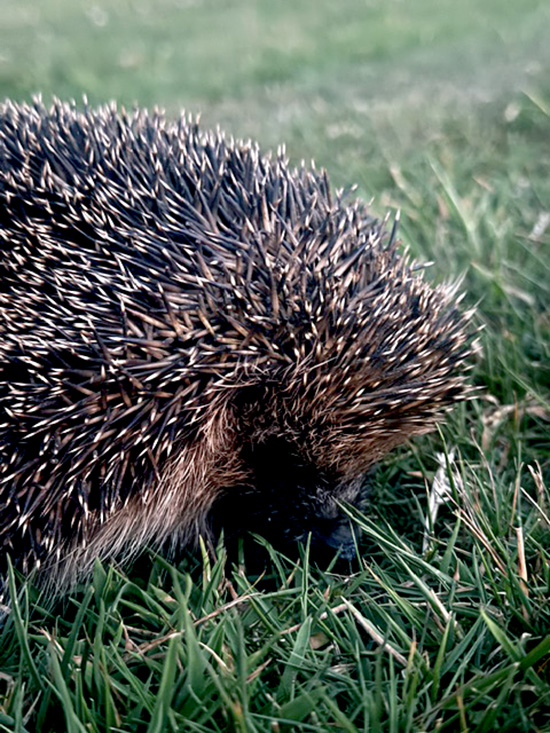
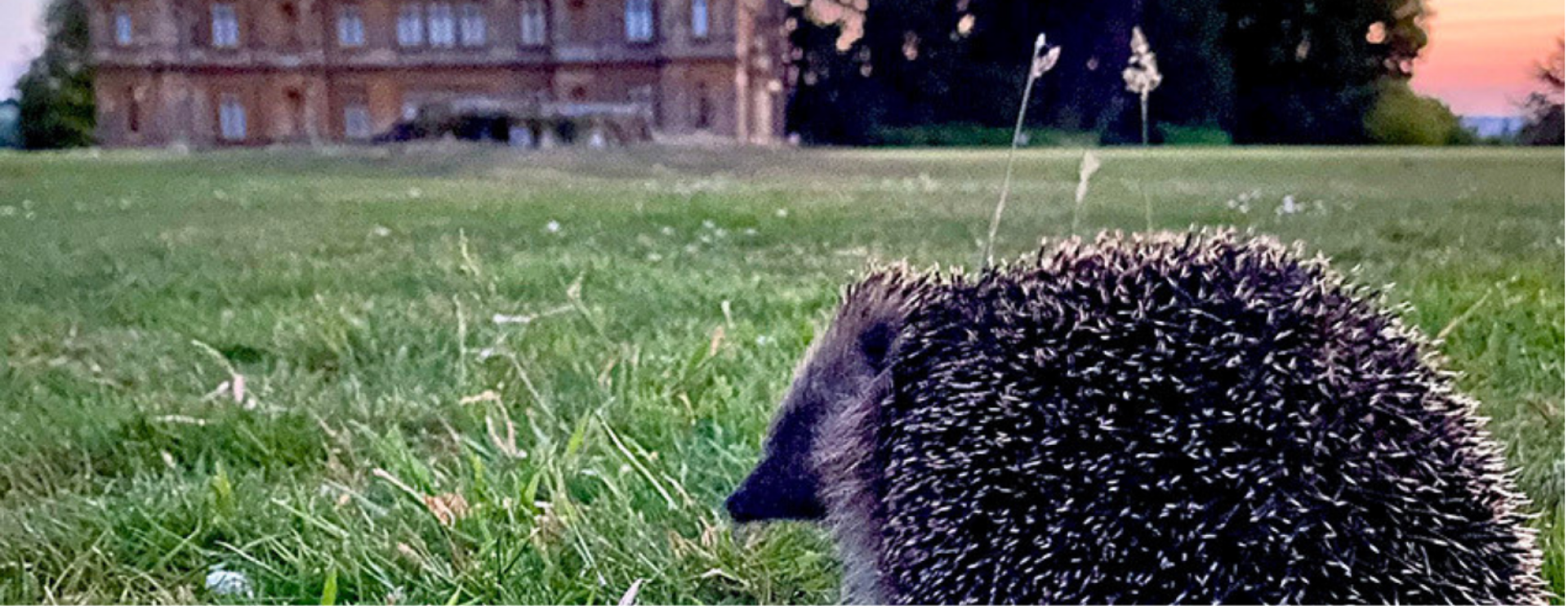
Last night I spotted a little hedgehog wiggling its way across the lawn, having bravely struck out from its normal habitat of hedges and undergrowth perhaps in search of new additions to its menu. As it proceeded it made little grunting noises almost like a piglet, hence its name hedgehog.
Hedgehogs usually sleep during the day, awaking at night or late evening to search for food. A hedgehog’s diet tends to consist of insects, worms, centipedes, snails and mice. They can walk over two miles in just one night to hunt for bugs and are thus a great help for gardeners as they love to eat slugs and caterpillars. Sadly, there is now considerable evidence for a dramatic decline in the hedgehog population since the millennium, by perhaps one third. Hopefully they like Highclere as there are very few fences here so they can roam and forage in freedom. We have a great variety of native hedges and vegetation here which is not at all manicured, so it supports a great diversity of bug life.
Hedgehogs have an annual litter which can range between one and eleven ‘hoglets’. The babies remain with their mothers for only four to seven weeks before heading out on their own but if you do manage to see them together, the collective noun is rather appropriately a prickle of hedgehogs. As autumn settles in, hedgehogs will all spend their time eating to fatten themselves up and building cosy winter nests (hibernacula) out of leaves and twigs as they prepare to prepare to hibernate through the winter. They do not have many predators, but females must guard against male hedgehogs, who might prey upon the young of their species
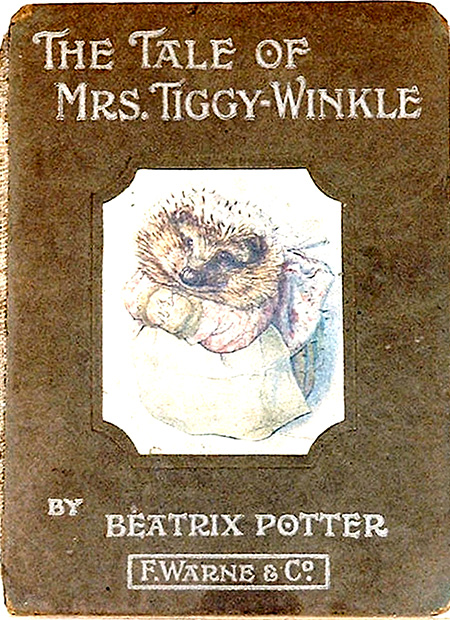
The most famous hedgehog is of course the endearing Mrs Tiggy-Winkle, the hard-working washerwoman from the Beatrix Potter stories whose character was inspired by Beatrix Potter’s own pet hedgehog. Written one hundred years ago when so many home chores were performed manually, these days the story is slightly from another time or world but with so much real detail that it is still a perfectly magical book.
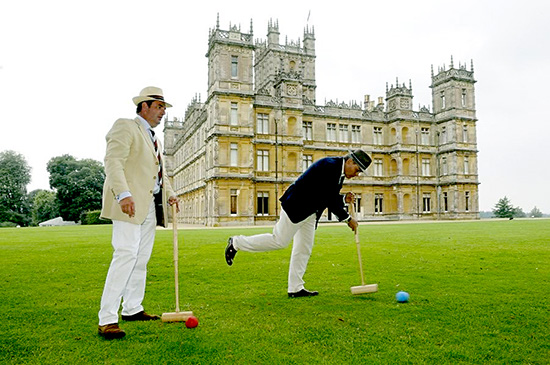
Hedgehogs also make an appearance in Alice in Wonderland as part of the mad Croquet game. In chapter eight, the Queen of Hearts creates a game of croquet where the hoops are made from playing cards of soldiers bent over at the waist, the mallets are upside down flamingos, and the croquet balls are curled up hedgehogs. Unfortunately, when Alice tried to deploy her flamingo mallet, it looked up at her in a quite off-putting way whilst the “croquet ball” simply uncurled itself and walked off.
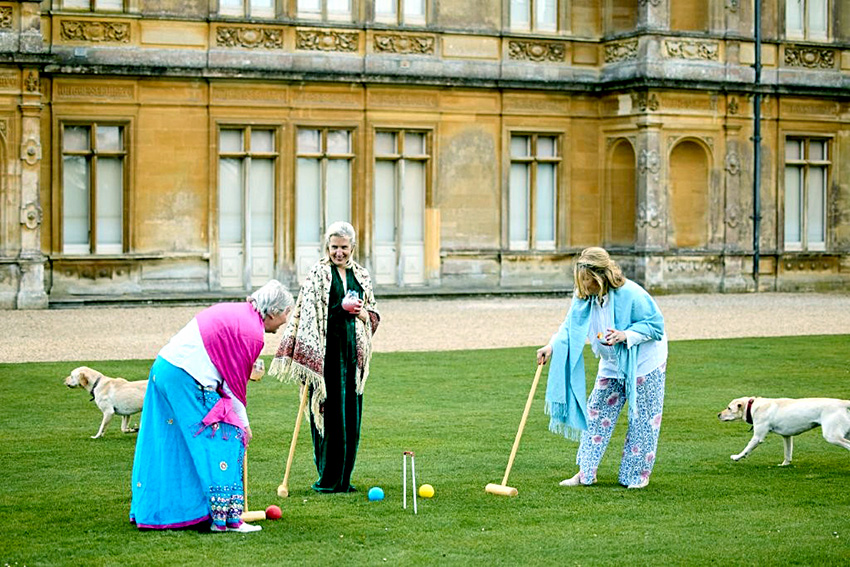
Croquet is in itself quite a curious game. My parents were very competitive, played as partners and took no prisoners. At one holiday house in Kent, the croquet pitch could best be described as sporting. It was slightly banked up on one side with a willow tree and pond on the other. It was thus very challenging with a huge advantage for the home team who knew it foibles – summer afternoon matches offered endless amusement.
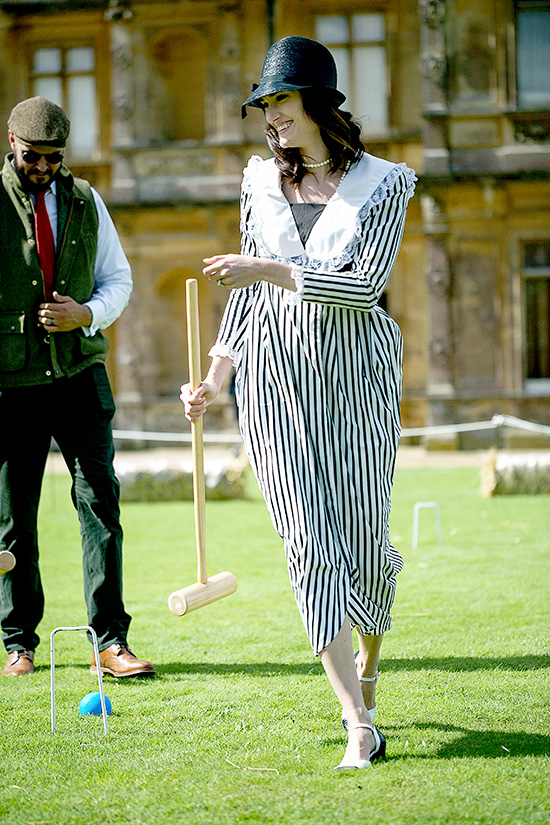
Whilst croquet may seem to be a quintessentially English game, the name suggests it was actually derived from a French game. The rules were highly variable until 1851 when the rules were standardised through John Jaques (whose croquet sets still remain the mark of excellence today) in collaboration with the All England Croquet Club. They have remained fundamentally unchanged since.
We still play it at Highclere and bring out our sets for various events such as the Magic of the Movies in September. One of our team, Sarah, has proved an excellent coach to visitors who wish to have a go although our mallet and balls are rather more conventional than flamingos and hedgehogs.

51 Comments
Lovely the. Picture of Mrs twiggy winkle and lovely Beatrix potter book of Mrs twiggy winkle and did you and lord Carnarvon have a wonderful weekend and lam a hoghcelere castle and Downton w
Lovely the picture of Mrs twiggy winkle an d fan of Downton abbey and highcelere castle
Thank you for your kind words Karen
What a great blog, thank you for the joy this morning, I've been very sad about Dame Penelope Keith passing, we have lost a great actress and friend to the English country side
I'm sorry to hear about your grievance. I'm delighted my blog provided a moment of joy for you. Sending healing wishes.
Lovely picture and of Mrs twiggy winkle and Downton Abbey
Dear Lady Carnarvon,
Thank you for another lovely tail and I really like the initial photo of the hedgehog in front of your home.
Thank you John
Thank you for the lovely read this morning. Mrs Tiggy Winkle is a real childhood favourite. My 3 sisters and I visited Hilltop Farm and saw the path where Beatrix Potter described seeing her taking handkerchiefs to wash. We too are grateful to the humble hedgehog for their contribution in keeping our gardens clear of destructive slugs and caterpillars, etc. It's a shame that such valuable little animals like them are in serious decline both here in the UK. I hope they continue to thrive at Highclere - a wonderful safe haven for them.
How lovely. Thank you for sharing Althea. We will do our best for these precious little creatures.
always enjoy getting these emails
My mother loved Beatrix Potter and collected a china set of her characters. I always put them out in spring on my mantle.
What a lovely idea for collectables and perfect for Spring.
They need water
Thank you for teaching me a new word (hibernacula)! Make me want to cozy-up my apartment for the winter!
Thank you for teaching me a new word (hibernacula)! Make me want to cozy-up my apartment for the winter!
You are most welcome Antoinette
My dearest Lady Fiona
Good day milady, from Brazil.
I love,soccer football, badminton,
croquet, golf too.
Thank you so much, for sharing this.
Good summer...
Vila Alemã
Rio Claro-SP
Brazil
I’m sitting on my porch in Illinois remembering my recent visit to Highclere. I can picture places in the garden
where croquet could be played. We used to have a set when I was a child and can remember my glee when I could hit my brother’s ball out into the wilderness!
So blessed to begin my week with your entertaining and memory inducing words.
Love your photos and varied bits of information about live hedgehogs and the sweetness of two books that are indeed from another world.
As I have had the privilege of visiting your majestic Highclere in July of 2025, I feel close to the hedge and lawn sights you describe.
There is a quote from Oswald Chambers that you may want to search for concerning those hedgehoggy people who come our way.
Looking forward to another visit. I love receiving your letters.
Thank you for sharing Trish, and thank you for visiting us at Highclere. I'm delighted you had a wonderful time.
Hedgehogs are such cute little critters... something I've never seen. Let's hope their numbers can increase. Too cute to lose!
Lady Carnavon: You are such a gifted writer! Thank you for sharing yours experiences from Highclere . Years ago the Treasures of King Tut were shown for the first and only time here in Seattle WA. I was able to take in the showing and thus became intoxicated with the story of Lord Carnavon and the discovery of the tomb. Thanks to you the story is still vibrant and alive.
Neil Gest
Sammamish WA.
Thank you for your kind words Neil. I appreciate it greatly.
As always, your brilliant writing ability makes these articles so enjoyable. Your research is thorough and informative, thus we always learn new and interesting facts. What a pleasure, thank you.
Thanks for your wonderful piece on Croquet! Love our wonderful English language word for a litter of wee ones—a prickle!
It is rather cute.
Thank you, Lady Carnarvon, for your enchanting post. It took me back to summer fun, playing croquet here in California with my sisters and cousins. And I devoured the Beatrix Potter stories!
What sweet stories. Thank you
Why do hedgehogs hog the hedges? Why can't they share?
This made me giggle. Thank you for sharing.
We have a croquet court at the senior residence where ai live. The younger residents use it for bocce ball. Right now it is too hot for either. Love your writings.
One of my fondest childhood memories is of playing croquet on the lawn of my best friend's house (her father was our GP and delivered me!!) and then enjoying tea in the gardeb beautifully prepared by their cook
I can still remember those scones, and jam and cream...... yummy!!
I grew up on the Isle of Wight BTW, but now live just south of Vancouver in British Columbia
That sounds like a wonderful childhood. Thank you for sharing your memories with me here.
“Hoglets”…cute! Thank you for the wonderful piece this morning. I learned a lot about hedgehogs, and reading your blog brought back heartwarming memories of my father reading Mrs. Tiggy-Winkle to me as a small child.
Lovely the picture of Mrs twiggy winkle l hope you and lord Carnarvon wonderful and lam fan of Downton abbey and hghcelere castle
Lovely to hear about the hedgehogs - my husband made a super hedgehog house last year but, so far, no-one has taken up residence - we live in hope!
What a lovely idea. I'm sure they will move in soon.
Lady Carnarvon,
We saw the play, "Alice in Wonderland, Jr." yesterday, and saw the upside-down flamingo mallets you mention in today's blog!
I hope your hedgehogs enjoy a long winter's nap at Highclere!
Thank you, Lady Carnarvon, for this fun read. I live in New Hampshire, USA, and badminton and croquet were a big part of my childhood. This piece aroused some very fun memories with my parents and family and friends. And hedgehogs were a common site. Have a great day.
I'm so glad this brought back wonderful memories for you.
What a lovely reading!! I’ m just abour to have my Beatrix Potter tea of the Mrs. Tiggy Winkle’ s tea can.
Love from Quilmes, Buenos Aires.
What a delightful post. Hedgehogs, dogs, and a bit of history to add to the fun memory of our croquet set we had as kids.
How your dogs don't wreak havoc with all those BALLS is beyond me. My chocolate boy Damon (how I miss that goofball) would have had such fun even though the balls are too big even for his lab-sized mouth.
I adore this news letter Lady carnavon and love hedgehogs, I cared for many when we lived in England had a feeding station and lovely wooden homes for them. You are so right, there is a rapid decline as they are on the endanger list its very sad. I am quite sure they are very much happy within your HighClere grounds. Have a lovely week and always look forward to every Mondays blog. Xx
That is so kind of you. Yes we will do our best at Highclere. Thank you for sharing your kind words
I had a croquet set as a child, also loved Beatrix Potter.
Lady Carnarvon,
I am a morning late reading your delightful article on hedgehogs (thanks for adding to my vocabulary) and reminding me of lazy summer afternoons playing croquet. Your blogs frequently remind me of something relatable, and that is so much fun! Thanks so much for the interesting info about hedgehogs. I hope they know how lucky they are at Highclere!
Martha G
Lady Carnarvon
Thanks for another great read. I remember seeing
hedgehogs in Suffolk and now, one of my friends
posts regularly on her efforts to rehabilitate them
So sad, because as gardens decrease so does
their habitat. I love that Highclere Castle has so
many thriving. Here in Texas, we have no hedge
hogs, but there are armadillos, also mainly nocturnal
Have a great week and hoping the weather cools
a little for you.
A delightful blog!
Thank you Lady Carnarvon.
Lovely read. Our neighbour has a hole in her fence for the hedgehogs ! A few years back we had one in the road trying to get to the hole in the end my late husband went out and lifted it up the kerb and off it went to the hole lovely to see them thankyou x
Longtime reader, Lady Carnarvon. I always find your blog entries so relaxing.
I was pleasantly reminded by the existence of Mrs. Tiggywinkle, not having read that story in over three decades. If I'd been asked to name the most famous hedgehog, I would have gone with Sonic the Hedgehog, but I suppose Beatrix Potter suits Highclere far better.
Leave a Comment

- Christmas
- Community
- Conservation & Wildlife
- Dogs & Horses
- Egypt & Tutankhamun
- Entertaining
- Farm
- Filming
- Gardens
- History & Heritage
- Daily Life
- Royalty
- Cooking
- Interiors
- Heroes
- Stories and Books
- Architecture
- Cars
- Conservation
- Downton Abbey
- Events
- Gardens & Landscape
- Highclere Castle Gin
- History
- Planes
- Restoration
- Stories & Books
- Uncategorized
- Visitors
- Wildlife
Dear Mrs Tiggie-Winkle!
Your piece reminds me of when I was in a production of ALICE IN WONDERLAND at the Birmingham Rep Christmas '88/89. People behaved quite well
in the Croquet Scene although the Mad Hatter's Tea Party at times was completely out of control, with the poor Mouse stuffed rather
aggressively into the enormous Teapot (Designer Terry Parsons)
Look forward to seeing you again soon - I was in the Corporate for DOWNTON - gosh, over ten years ago!
Love Carola Stewart x www.spotlight.com/9250-9089-2372